
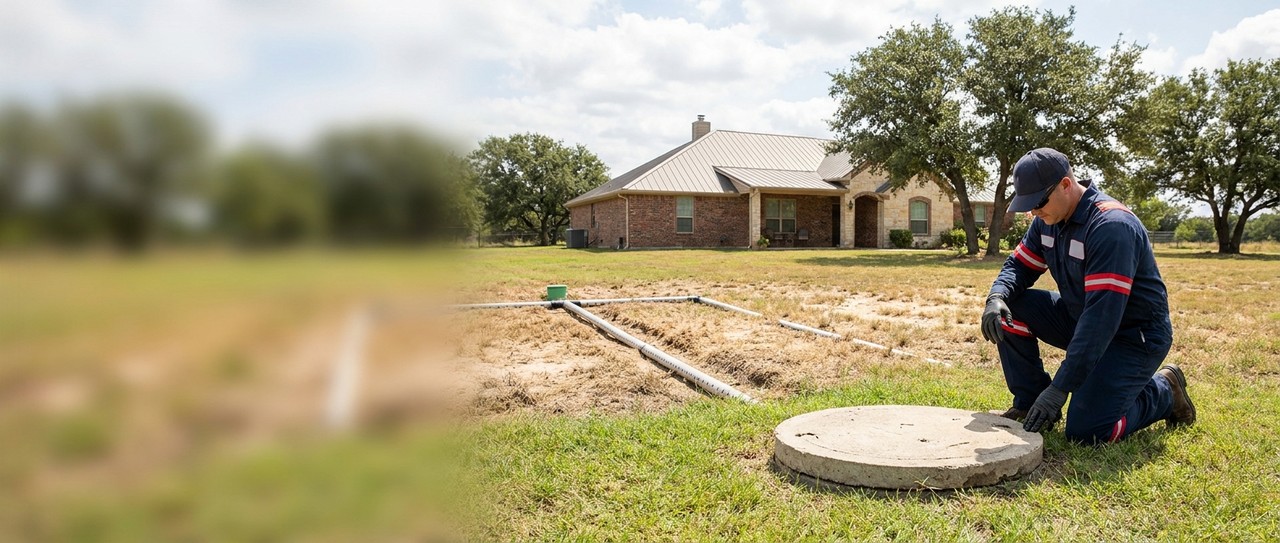
Conventional Septic Systems
Gravity-fed tank and drain field service for traditional systems, from routine inspection through full repair.
Tank & Field Specialists
Complete service for gravity-fed conventional systems.
Long-Term Reliability
Fewer mechanical components means fewer things to fail.
Financing Available
Flexible options for larger repairs.
Serving North Texas
Proudly serving homes and businesses across North Texas.
Expert Conventional Septic Systems For North Texas Property Owners
Conventional systems are simple and reliable when properly sited, pumped, and maintained.
Baffle & Outlet Tee Repair
Replacing damaged baffles and outlet tees to protect the drain field.
Request Service →Root Intrusion Removal
Clearing and repairing lines damaged by tree and shrub roots.
Request Service →Distribution Box Service
Repair and leveling of distribution boxes for even field loading.
Request Service →Conventional System Inspections
Documented inspections for sale, permitting, or peace of mind.
Learn More →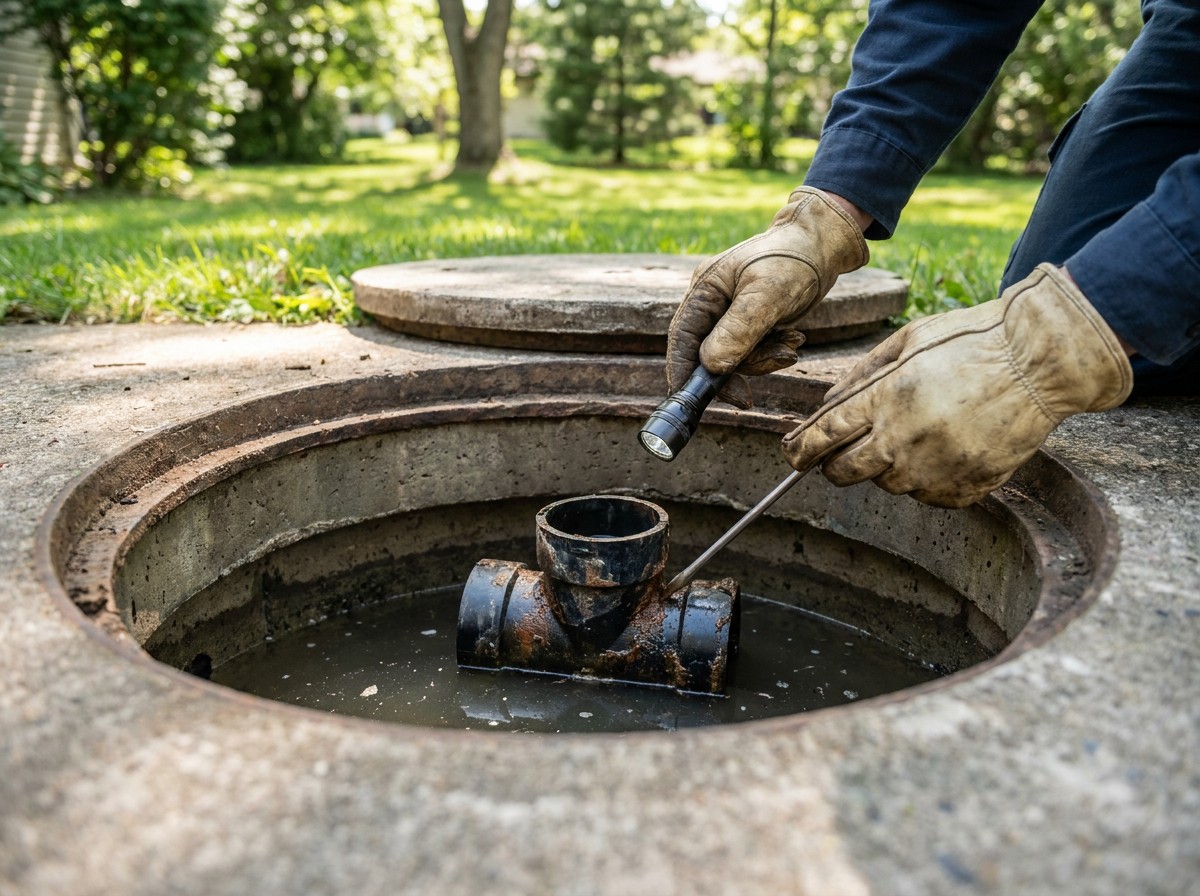
Trusted Conventional System Specialists
Conventional systems are simple and reliable when properly maintained. We've serviced tanks and drain fields across North Texas for over 20 years.
- Experienced, certified technicians
- Emergency service availability
- Honest diagnostics & upfront pricing
- Financing options available
- Fast turnaround & efficient repairs
- Local North Texas coverage
- Repair-first approach — no upsell
- Reliable, long-term support
Conventional System Problems We Fix
Most conventional system issues trace back to a full tank, a damaged line, or a saturated drain field.
Slow drains across multiple fixtures usually mean the tank is full or a line is partially blocked.
This typically means the field is not absorbing wastewater properly, often from tank overflow or field saturation.
Yes — roots from trees and large shrubs can crack tanks and invade drain lines. Keep them well clear of the tank and field.
Slow drains, odor, or a field that stays wet longer than normal are common signs it's time for pumping.
Our Conventional Septic Systems Process
A straightforward process from first call to finished work.
1. Site & Soil Assessment
We evaluate tank condition, drain field layout, and soil drainage.
2. Tank & Field Inspection
Checking for solids buildup, cracks, root intrusion, and saturation.
3. Repair or Pumping
We complete the needed repair, pumping, or component replacement.
4. Preventive Plan Setup
We recommend a pumping interval matched to your household and soil.
Frequently Asked Questions
Common questions about conventional septic systems.
A conventional system uses a septic tank to separate solids from wastewater, which then flows by gravity into a drain field for soil absorption.
With proper pumping and care, a well-sited drain field can last 20-30 years or longer. Overloading or neglecting pumping shortens this significantly.
Grass is recommended over a drain field. Avoid gardens, trees, and anything requiring digging, since roots and excavation can damage the pipes and gravel bed.
Slow drains, sewage odor, standing water over the field, and gurgling pipes are the most common warning signs.
Most households need pumping every 3-5 years, depending on tank size and household size.
Related Services
From the Learning Center
Helpful reading related to this topic.
Need Conventional System Service?
We're ready to help with fast, reliable septic service when you need it most.